

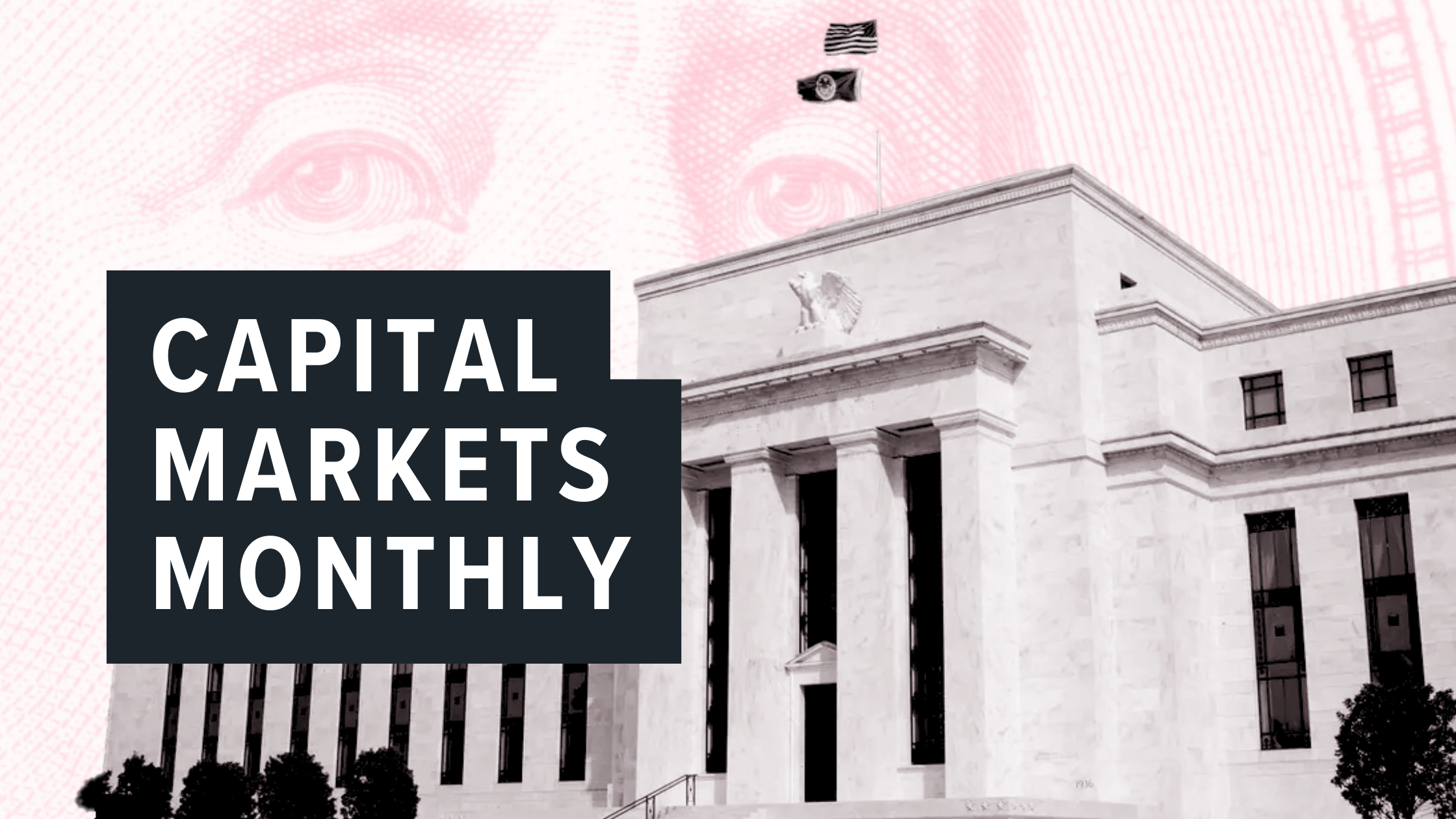
Fed Holds Rates Steady at 3.50%–3.75% as Three Officials Vote for a Hike
At its July meeting, the Federal Open Market Committee (FOMC) maintained the target range for the federal funds rate at 3.50% to 3.75%. However, three members voted against the policy, preferring to increase the target range by one quarter percentage point. The FOMC noted that economic activity is expanding, even though Middle East tensions continue to fuel uncertainty. The labor market remains balanced with steady unemployment and job growth, but inflation remains stubbornly above the Fed’s 2% target due to ongoing energy and supply shocks. The Committee reiterated its commitment to deliver price stability. The next meeting will be September 15-16.
Chairman Kevin Warsh observed that nominal and real yields rose materially across the Treasury curve since the FOMC’s last meeting in June. He attributed this to a market focused on real data and economic developments rather than forward guidance from the Fed.
“Market participants are learning to play the ball, not the referee—and market prices will continue to respond in the direction and magnitude they see fit,” Warsh said. “This is, in my view, a change for the better—and we are just getting started. After all, the central bank need not always and everywhere be the center of attention.”
Capital Keeps Flowing in NYC Commercial Real Estate as Lenders Stay Active
“Although interest rates have remained higher for longer, that fact didn’t discourage commercial real estate investors in the first half of the year in New York City where we saw property sales rise 37% year over year to $17.38 billion,” said Matt Swerdlow, Senior Director in GREA’s Capital Services Group. “The market has been remarkably resilient with multifamily, development and office sales especially robust, increasing by 21%, 61% and 31%, respectively compared to the same six-month period last year.”
Several factors are driving the uptick in New York City activity, Swerdlow said. Lenders are forcing action on maturing debt, sellers are pricing to today’s market, borrowers have adapted to elevated rates and new investors are stepping in to buy at a lower basis.”
“Plenty of capital is still available for commercial real estate transactions and lenders are eager to deploy funds,” he said. “All of our assignments are still getting a full lender matrix and we’re producing multiple quotes on every deal. Most interestingly, of our most recent 25 closings, we arranged financing with 21 distinct lenders proving the depth of the capital markets today.”
The appetite for construction loans has remained exceptionally strong in New York City and across the nation. Housing shortages, exacerbated by government regulations, have resulted in high rent growth for free market assets. Therefore construction lenders are aggressively underwriting new residential developments.
Recent New York City Financing Activity
Examples of recent construction and multifamily acquisition loans negotiated by the Capital Services Group include:
- A $4.4 million condo construction loan for a four-unit development site in Boerum Hill, Brooklyn. Terms of the non-recourse loan included a 8.5% interest rate floor and a 30-month term.
- A $3.5 million acquisition loan for a 43-unit rent stabilized building in Upper Manhattan. Terms of the five-year bank loan featured a 6.25% interest rate and 70% LTV.
- A $1.85 million acquisition loan for a 36-unit Bronx multifamily building in which 75% of the units are rent stabilized. Terms of the five-year bank loan included a 6.40% interest rate at 70% LTV.
Mortgage Originations Bounce Back Strong as Investor Demand Expands
As in New York City, the enthusiasm for commercial real estate was evident nationwide. According to the Mortgage Bankers Association Origination Index, commercial and multifamily mortgage loan originations jumped 52% in Q1 2026 compared to Q1 2025.
There was a solid appetite for all asset classes in the first quarter, the MBA report showed. Loan originations increased for multifamily (up 49%); retail (up 148%); industrial (up 56%); hotels (up 85%); and health care (up 209%). Originations for office, however, declined slightly (-2%).
Among the lender types, originations in Q1 2026 increased year-over-year for investor-driven lenders (up 133%); depository institutions (up 80%); Fannie Mae/Freddie Mac (up 38%); life insurance companies (up 9%) but fell for CMBS/Conduits (-14%).
Commercial Real Estate enters a New Era of Confidence and Active Capital Deployment
As both local momentum in New York and national lending indices demonstrate, capital is far from sitting on the sidelines. The commercial real estate market is adjusting to the new economic reality. Driven by aggressive lenders, motivated buyers, and resilient asset classes, the sector is moving forward into the rest of the year with renewed confidence and active deal-making across the board.
Multifamily Loan Programs
| PORTFOLIO LENDERS | AGENCY LENDERS | |||||||
| Term | Rates | Term | Rates | |||||
| 5 Year | 6.00% – 6.75% | 5 Year | 5.35% – 6.10% | |||||
| 7 Year | 6.25% – 7.00% | ar | 5.40% – 6.05% | |||||
| 10 Year | 6.50%+ | 10 Year | 5.45% – 6.05% | |||||
Commercial Loan Programs*
| Term | Rates | ||
| 5 Year – Bank | 5.85% – 6.75% | ||
| 7 Year – Bank | 6.00% – 6.85% | ||
| 5 Year – CMBS** | 6.00% – 6.75% | ||
| 10 Year – CMBS** | 6.25% – 6.75% |
Construction/Development/Bridge (Floating Over 1-Month Term SOFR)
| Type | Spread (bps) | ||
| Stabilized / Core | 175 – 250 bps | ||
| Value Add / Core Plus | 250+ bps | ||
| Re-Position / Opportunistic | 425+ bps |
Index Rates
| Index | Rates | Index | SOFR Swap | |||||
| 5-Year Treasury | 4.41% | 5-Year SOFR Swap | 4.09% | |||||
| 7-Year Treasury | 4.54% | 7-Year SOFR Swap | 4.12% | |||||
| 10-Year Treasury | 4.69% | 10-Year SOFR Swap | 4.20% | |||||
| Prime Rate | 6.75% | |||||||
| 30-Day Avg. SOFR | 3.62% | |||||||
| 1-Month Term SOFR | 3.75% | |||||||
| Ameribor Unsecured Overnight Rate | 3.68% | |||||||